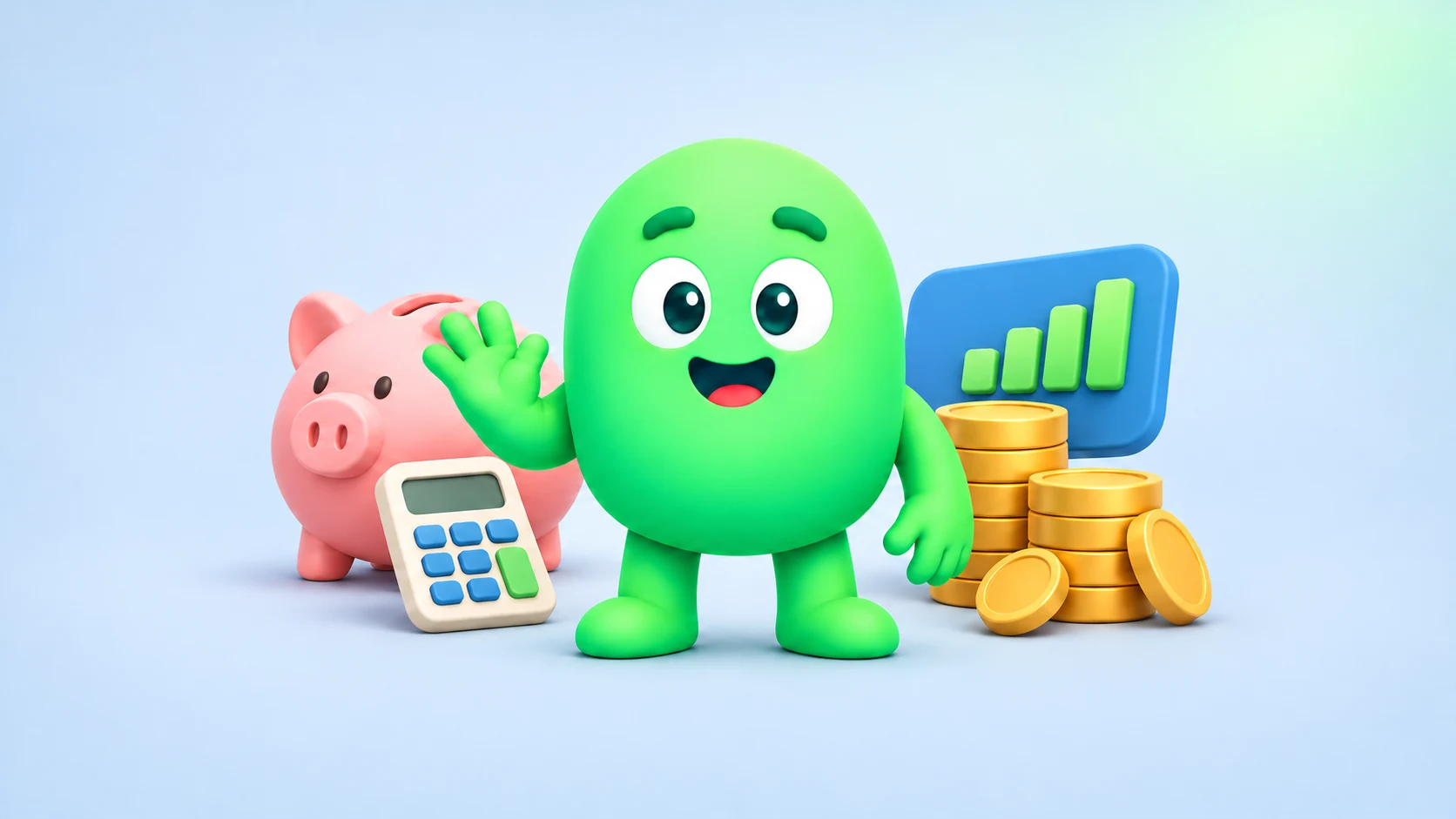
Building a financial gym, one habit at a time.
Yuhu helps companies strengthen their employees' finances. I was part of the first team that built its app — we tried ideas, threw many away, and landed on a product people come back to. Today I own it.
- Role
- Founding product team → Product Owner
- Timeline
- 2024 – Present
- Worked with
- Engineering, data, legal, finance
- Platform
- iOS & Android
- The problem
- Money stress follows people to work and pushes them to leave. A one-off benefit doesn't fix it — sustained habits do.
- What I did
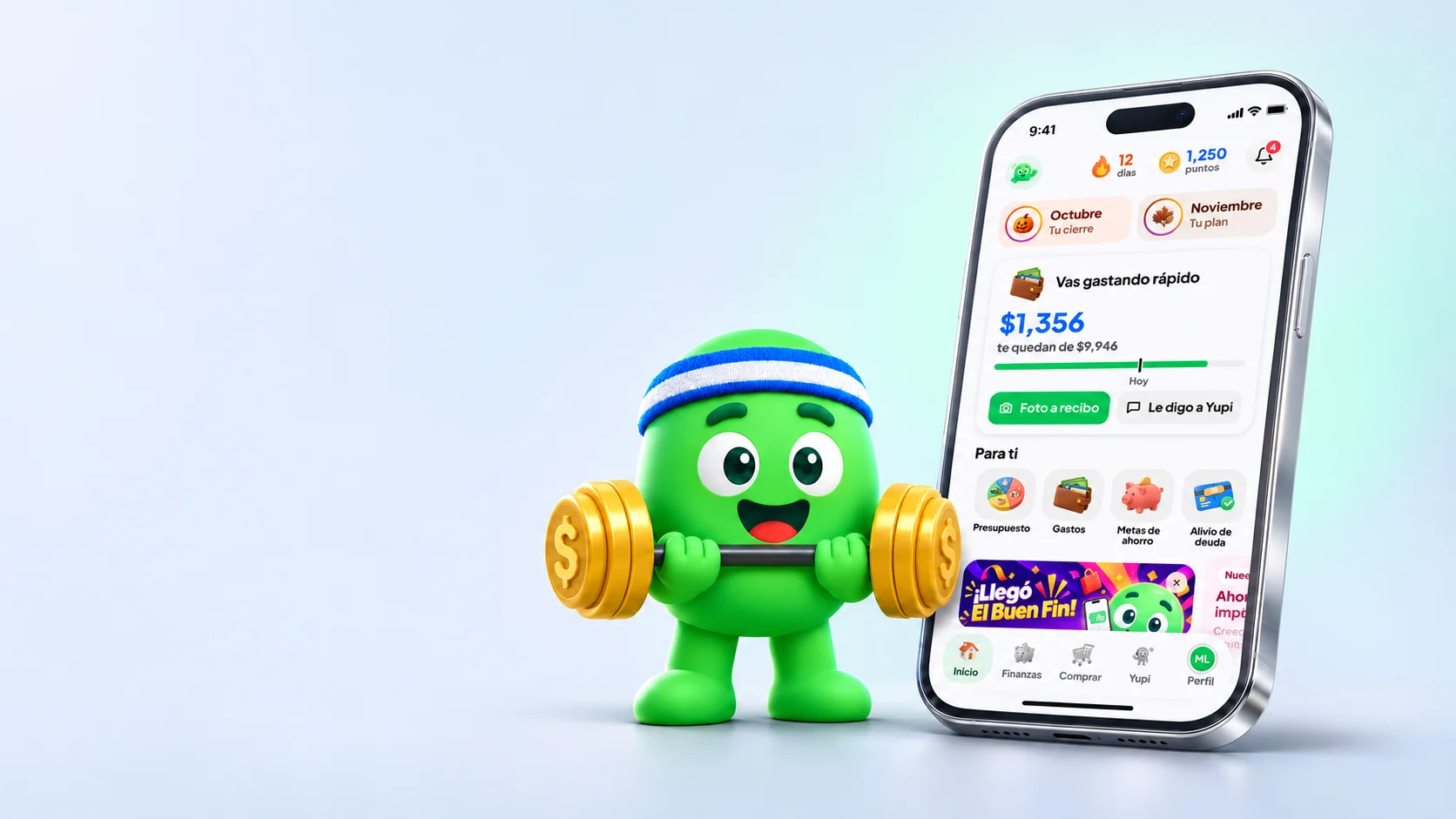
- We framed the app as a gym, not a bank: a guided route of small exercises, a coach who celebrates every step, and rewards for consistency.
- The outcome
- A live iOS and Android app that guides each employee one step at a time — and a product I now own end to end, from roadmap to release.
Why an app for money habits
Financial stress takes up attention, lowers performance, and pushes people to change jobs for any raise. Research by Yuhu and Tecmilenio found that personal financial wellbeing predicts whether an employee stays or leaves.
But a credit score doesn’t move with a single benefit. It moves with habits: knowing where you stand, organizing spending, getting out of expensive debt, saving, and paying on time. The Yuhu App is the daily tool that turns that evidence into practice.
From the first team to owner.
I joined Yuhu in 2024 as part of the first team working on the app. There was no finished spec: we tried ideas, prototyped, tested with real employees, and dropped what didn’t work until a product took shape.
Over time I moved from analyzing how people used it to owning it. Today I align releases with the company’s vision, lead new modules with engineering, legal, and finance, design the flows, and measure everything we launch.
A gym, not a bank.
Nobody walks into a gym already in shape. The app doesn’t present itself as a bank or a store, but as a place to train — “Welcome to your financial gym.” Four principles shaped every screen:
- Remove the guilt
Starting with debt is the starting point, not a failure.
- Reward consistency
Streaks and small weekly steps are worth more than one big effort.
- Make progress visible
Points, badges, and celebrations turn an invisible habit into something to celebrate.
- Always a next exercise
The app guides step by step — never an empty menu.
One next step at a time.
The app unlocks exercises in order: diagnose, plan, log, then build habits. Each screen does one job and points to the next.
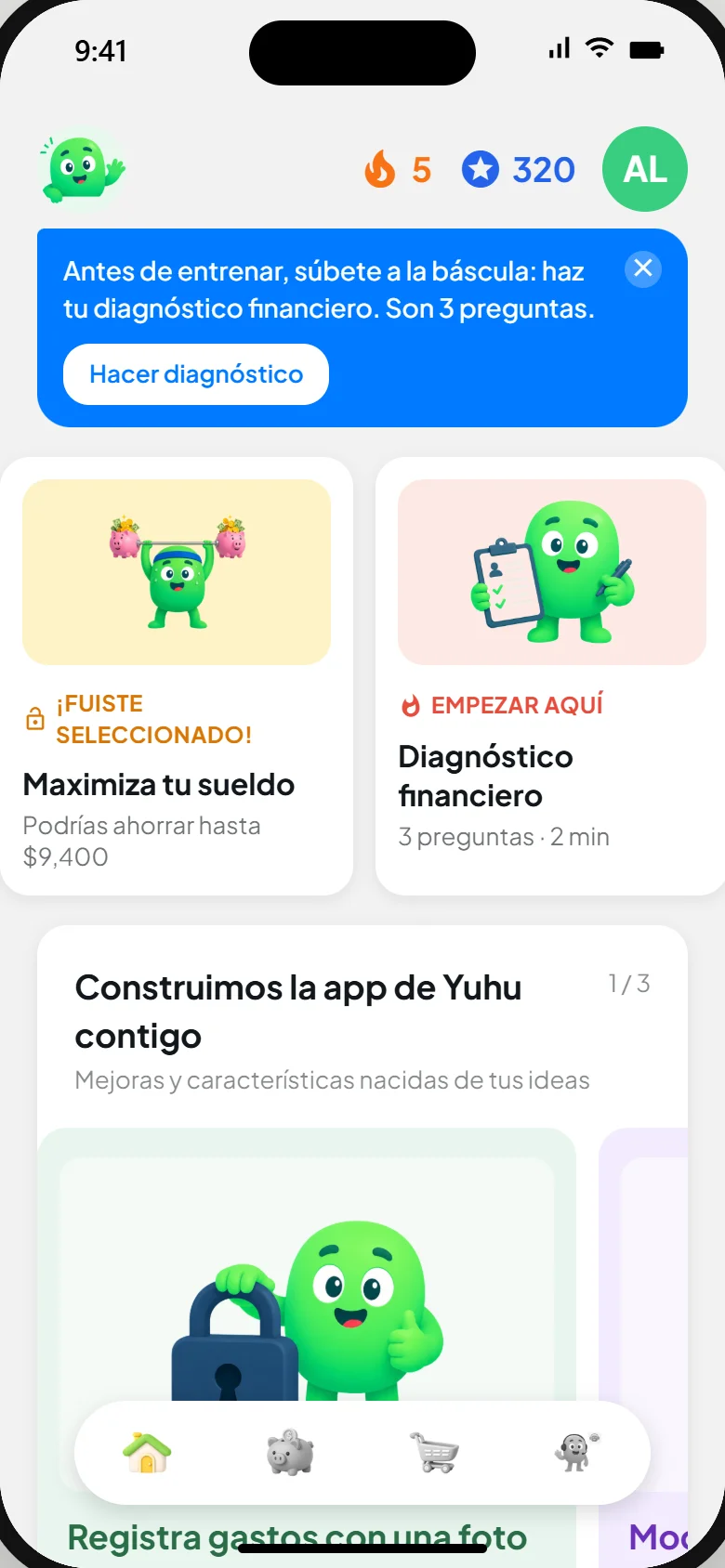
Home shows one next step
- A single card says what to do now — no menu to figure out.
- Yupi’s message of the day pushes in the same direction.
- Streak and YuhuPoints sit at the top, always in sight.
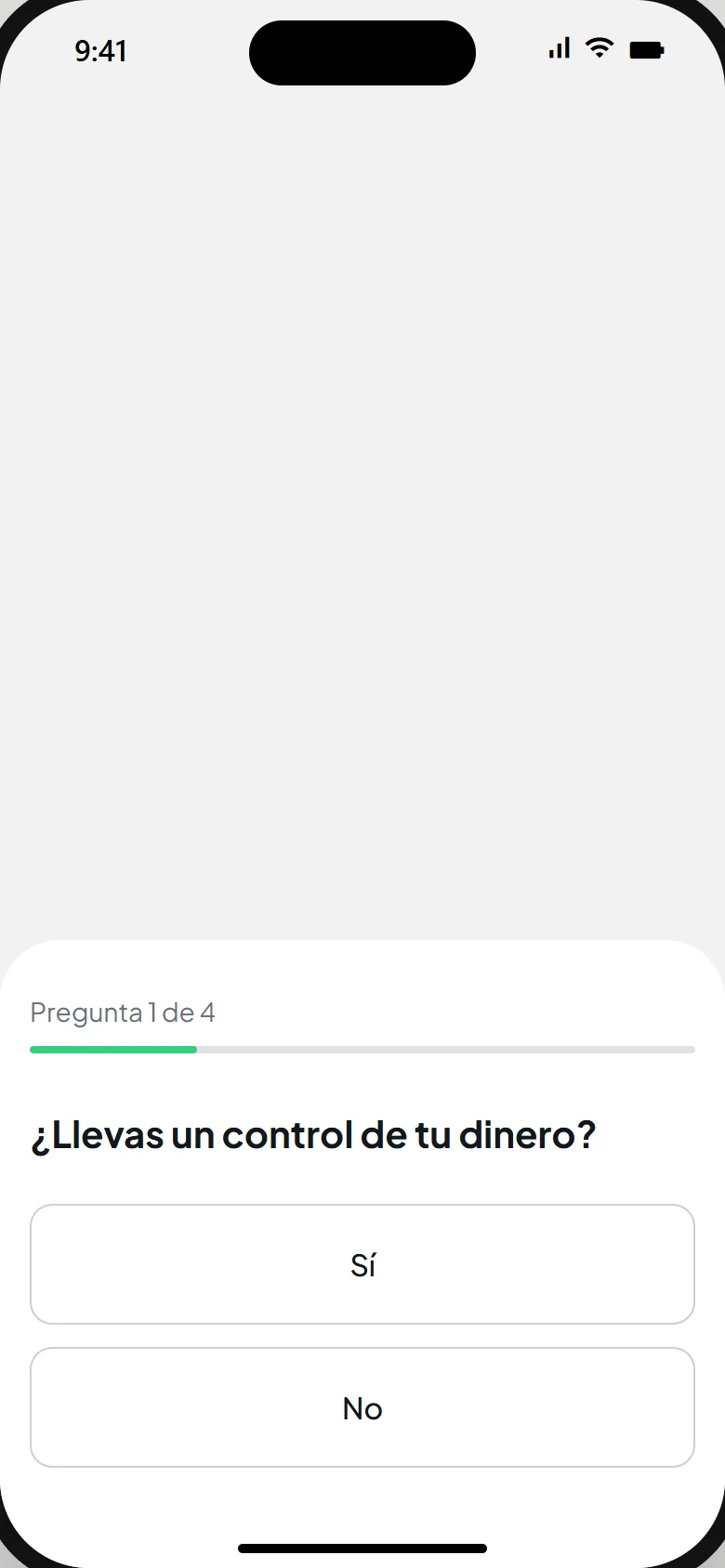
Step on the scale
- Three yes/no questions plus income — about two minutes.
- Finances stay locked until it’s done, so every plan starts from real data.
- Simple, everyday language: “¿Te completa la quincena?”
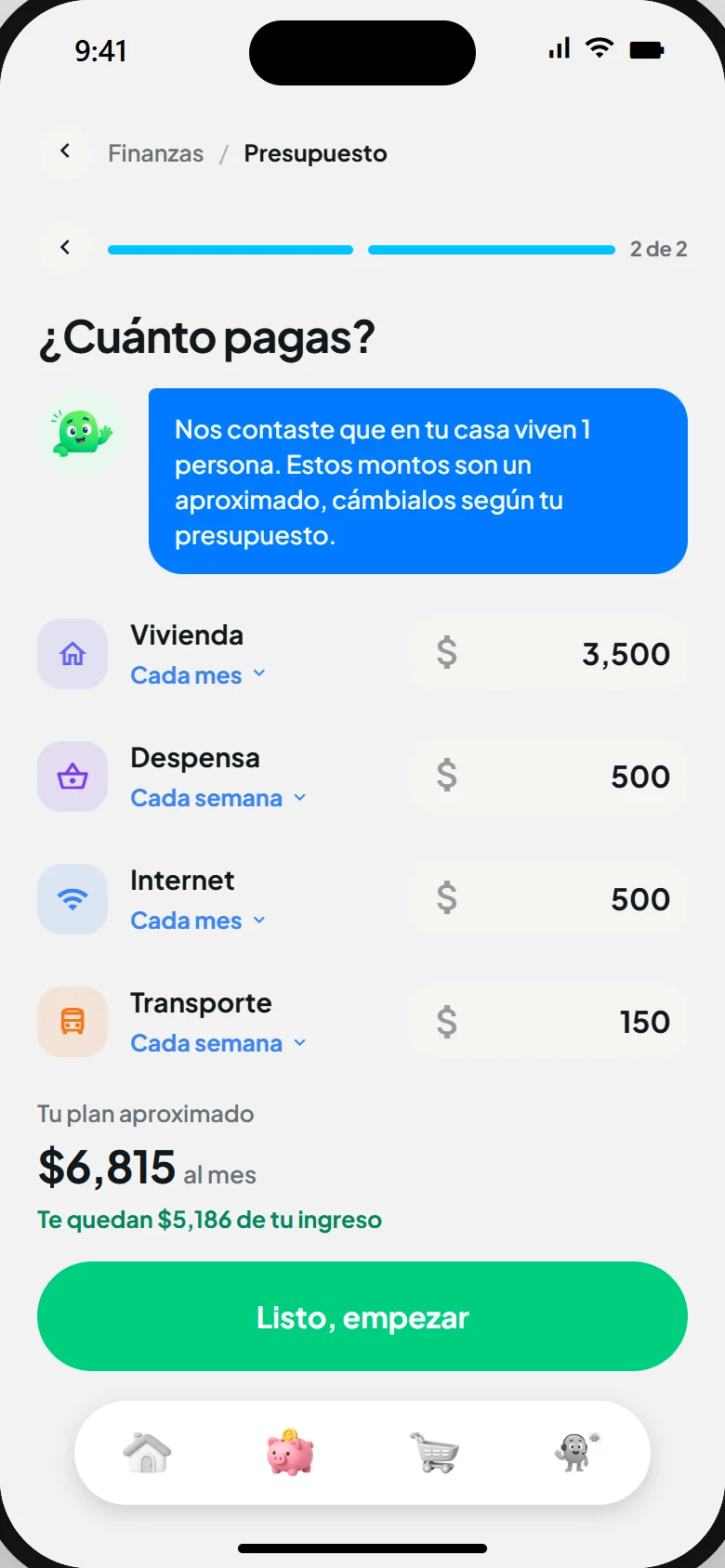
A budget that fills itself in
- Pick what you pay; amounts come pre-filled from your household and national spending data.
- Yupi explains they’re estimates you can change.
- A live total shows what’s left of your income as you edit.
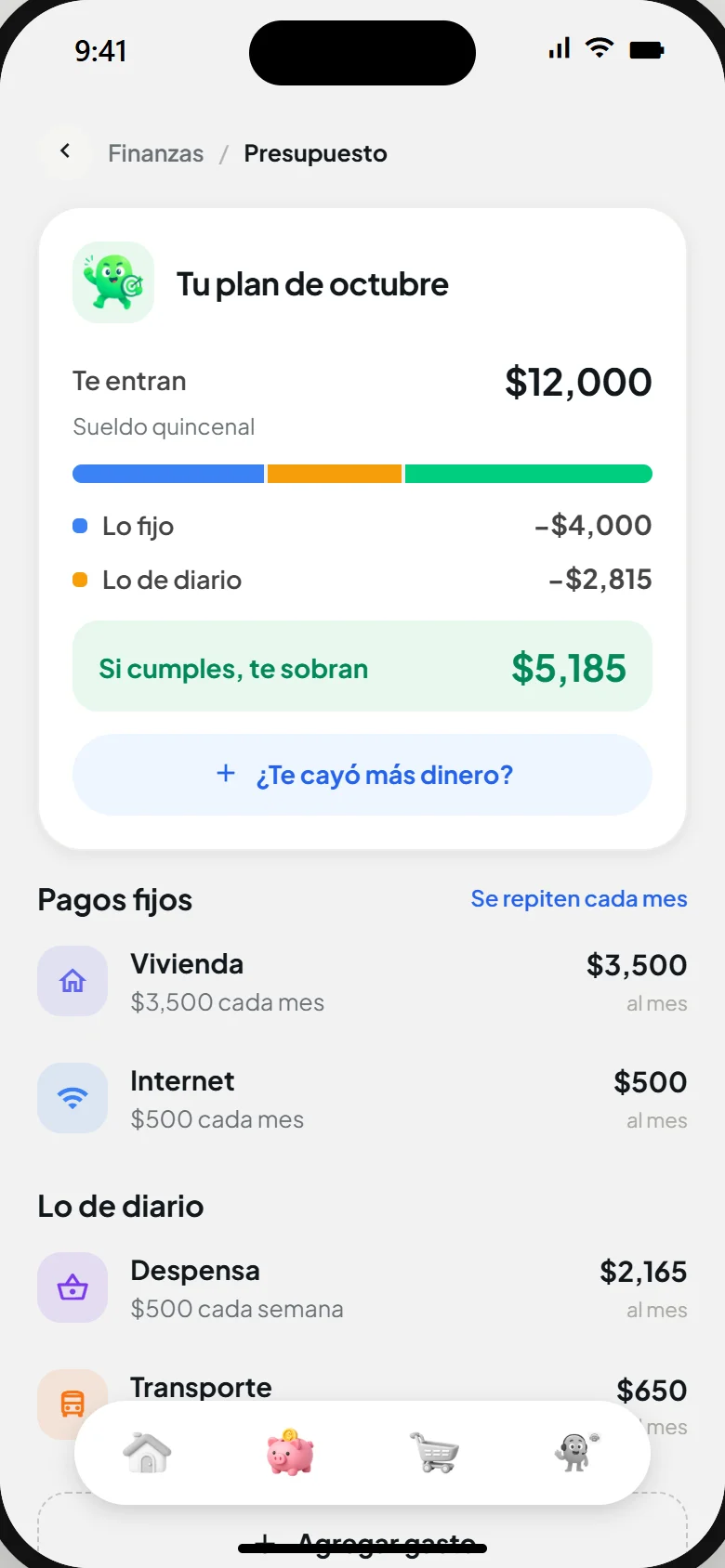
Your plan of the month
- Money in, fixed costs, everyday spending — and what’s left if you stick to it.
- Extra income (bonuses, side money) can be added anytime.
- The plan renews every month.
Points, streaks, and badges make habits visible.
In a gym, progress shows in the mirror. With money it doesn’t. Gamification makes the habit visible: YuhuPoints for every exercise, streaks for coming back, badges for milestones, and a mystery box that turns points into real rewards.
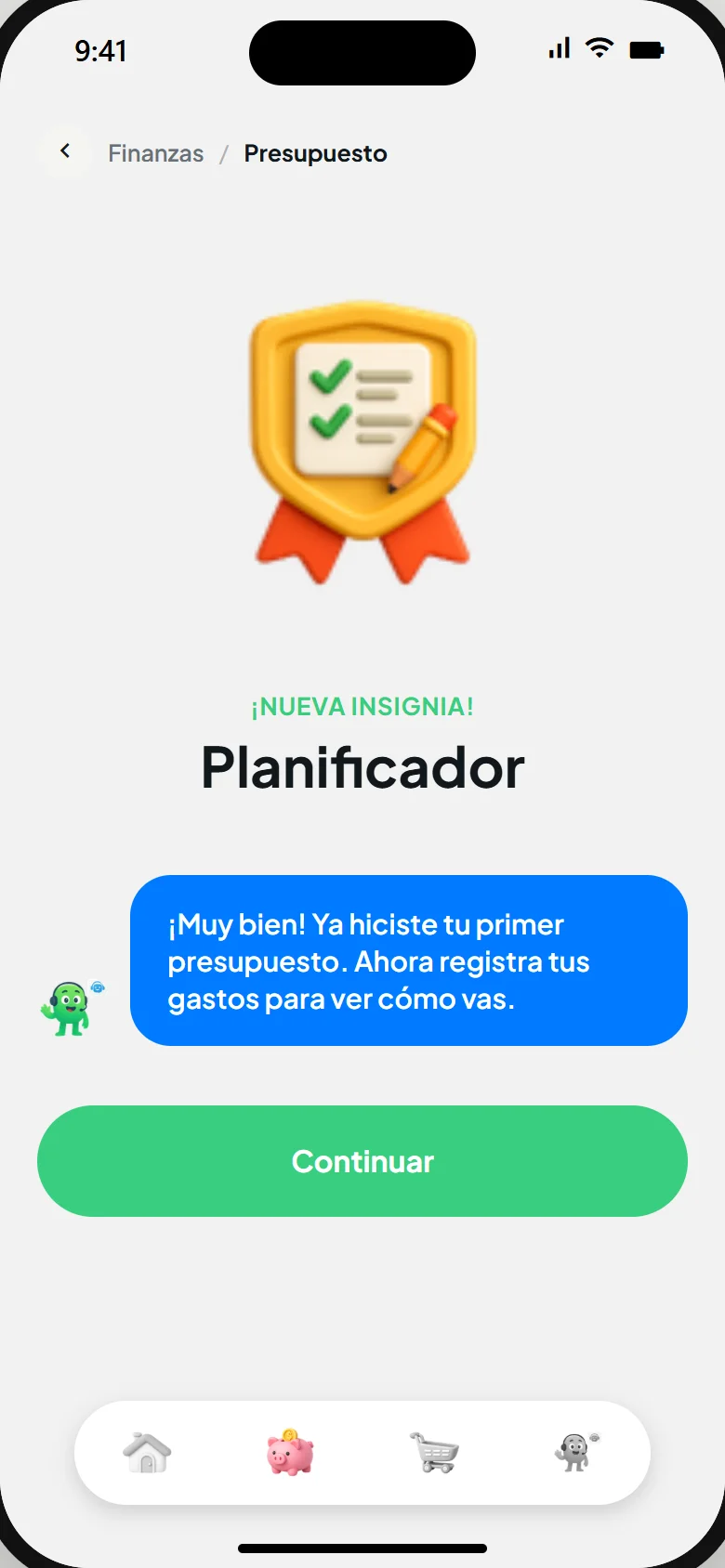
Celebrate the milestone
- Building your first budget unlocks the Planificador badge.
- Yupi congratulates you and points to the next step: log your expenses.
- Badges mark firsts — first plan, first week, first goal kept.
The game rewards doing the exercise — never how much money you have. The ranking compares activity, and nobody sees what anyone else earns or owes.
Ideas from users ship with their names on them.
People can send an error, an improvement, or an idea from their profile. When one of those ideas is released, it comes back to Home as a card that says what changed — and who suggested it, by name. Likes on each card show which improvements people value most.
From idea to the store.
Every release runs through the same eight steps, with development and measurement happening side by side. What we measure and what people tell us feeds the next wishlist.
- 01Ideas
Wishlist, user feedback, and metrics
- 023 features
The scope of each release
- 03Design
Mockups, assets, and flows
- 04Hand-off
Requirements and test plan
- 05Development
Back end and front end
- 06Measurement
Admin ready to measure
- 07Live testing
We test and adjust together
- 08Publishing
Google Play and App Store
Dashboards ready before launch day.
Each step in the app feeds the indicators the company follows. Before a feature is released, I build the dashboards that will measure it — so on launch day we already know what to watch. That work is its own story: see the product analytics case study.